
The AI Bubble Will Pop Without This $240B Monopoly
The AI revolution just hit a physical wall. Why Nvidia’s chips are useless without GE Vernova’s grid - and why the market is pricing this supercycle completely wrong.
The global economy is currently seeing a historic capital rotation, transitioning from an era dominated by intangible software services into a supercycle defined by hard, physical infrastructure.
The AI revolution, long conceptualised as a digital phenomenon, has hit a wall in the physical constraints of the electrical grid.
GE Vernova is the toll booth for this economic shift.
While the broader market sees a legacy industrial manufacturer trading at a seemingly stretched multiple, a more intelligent analysis reveals a highly misunderstood infrastructure monopoly.
The market has fundamentally mispriced the pricing power inherent in a sold-out manufacturing base, the brilliance of recent acquisitions, and the geopolitical tailwinds driving domestic energy security.
This article will argue that the recent price action, while strong, is merely the beginning of a multi-year re-rating.
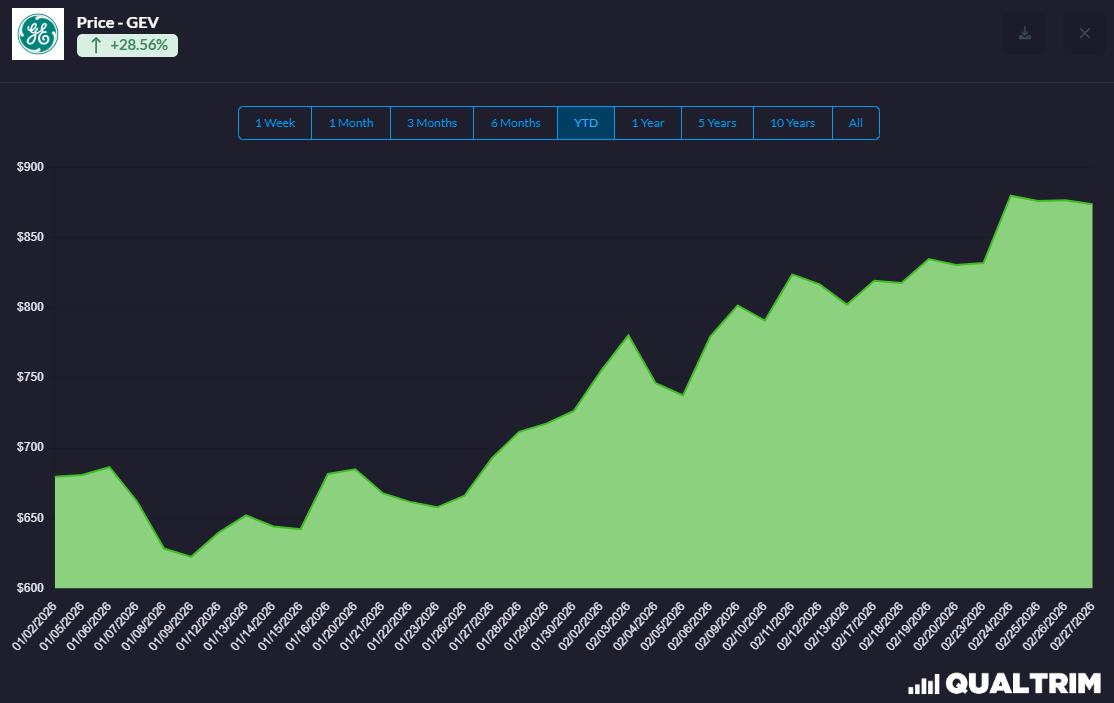
GE Vernova possesses a $150 billion backlog, effectively guaranteeing revenue visibility through the end of the decade.
Furthermore, the company’s recent acquisition of Prolec GE creates an insurmountable moat within the electrification sector, while shifting macroeconomic and political mandates guarantee a surge in natural gas power generation.
The market is currently presenting us with a compelling entry point into a business that has recently separated from its conglomerate structure, doubled its dividend, and operates in an oligopoly with some of the strongest pricing power you will find across any heavy industry.
Geopolitics and The Great Rewiring
The transition to renewables was already placing unprecedented strain on ageing electrical grids, driven by the electrification of transport and heating.
However, the sudden and exponential rise of AI and the requisite hyperscale data centres have entirely broken traditional utility planning models.
Data centres require immense volumes of baseload power to maintain the constant uptime required by advanced computational workloads. That is a fact.
Intermittent renewable energy sources, while politically popular in certain jurisdictions, cannot provide the continuous, uninterrupted power required by these facilities without prohibitive investments in utility-scale battery storage. This is an inescapable physical constraint.
Consequently, the technology sector has been forced to embrace natural gas as the definitive bridge fuel for the AI era.
This physical reality has recently been compounded by severe geopolitical and domestic policy shifts.
As I’m sure you all know, the geopolitical landscape also fractured further with the escalation of conflict in the Middle East, culminating in Iran effectively closing the Strait of Hormuz to ships.
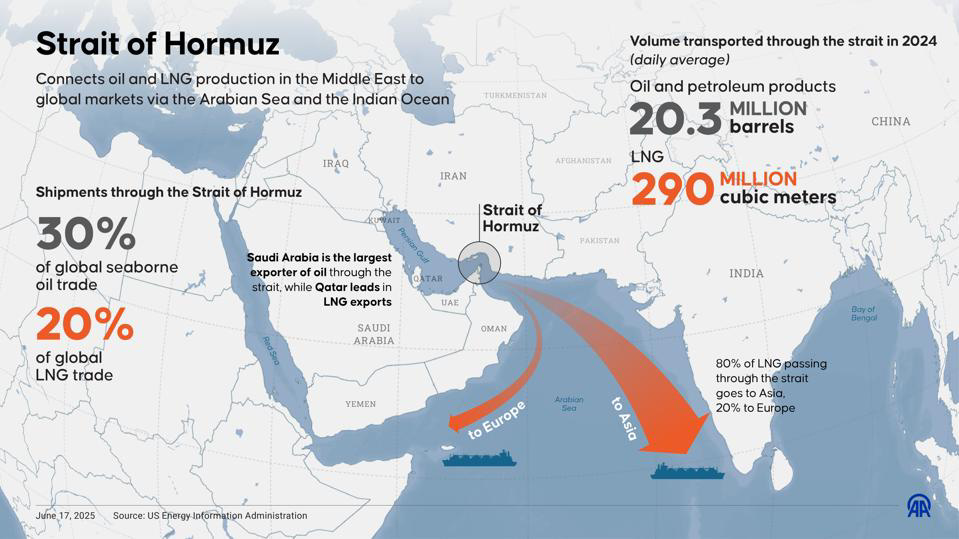
With 20% of global oil demand passing through this chokepoint, Brent crude has spiked sharply above $72/barrel, with Barclays forecasting a potential breach of the $100 threshold.
This geopolitical instability has cemented energy security as a primary national security objective for the United States, driving domestic policy toward absolute energy independence and a reliance on domestic natural gas.
Simultaneously, the domestic political landscape in the US has shifted violently in favour of GE Vernova’s core business model.
During the State of the Union address in early 2026, the Trump administration outlined a fierce energy dominance agenda, explicitly targeting the expansion of fossil fuel production and announcing a ratepayer protection pledge.
This pledge, formalised in coordination with Amazon, Google, Meta, and Microsoft, mandates that hyperscalers must fund and secure their own power generation for new data centres rather than passing the immense infrastructure costs onto ordinary utility ratepayers.
This directive forces the world’s most capital-rich technology companies directly into the arms of GE Vernova. If a technology conglomerate wishes to build a gigawatt-scale data centre, they can no longer simply plug into the grid; they must procure their own generation assets.
Furthermore, the administration announced the deployment of the first tranche of a monumental $550 billion investment agreement with Japan. This initial $36 billion deployment includes a $33 billion natural gas-fired power plant in Portsmouth, Ohio, backed by SB Energy, which is projected to generate 9.2 gigawatts of electricity, making it the largest in US history.
The intersection of these macro factors creates a demand environment for power generation equipment that is completely unprecedented in modern industrial history.
The market has yet to fully digest the reality that technology companies are now effectively operating as independent power producers, and GE Vernova is their primary equipment supplier.
Earnings
The financial results delivered by GE Vernova for Q4 and the full year of 2025 give us validation of this infrastructure supercycle.
On the surface, the numbers were spectacular, but the underlying mechanics of the order backlog dictate the true trajectory of the equity.
For the full year 2025, the company reported revenue of $38.1 billion, representing a 9% YoY increase.
Net income reached $4.9 billion, though I must note that this figure was artificially inflated by a $2.9 billion tax benefit related to the release of a US valuation allowance.
However, the operational metrics require no accounting adjustments to demonstrate exceptional health. Adjusted EBITDA expanded to $3.2 billion, achieving an 8.4% margin, which represents an expansion of 210 basis points over the prior year.
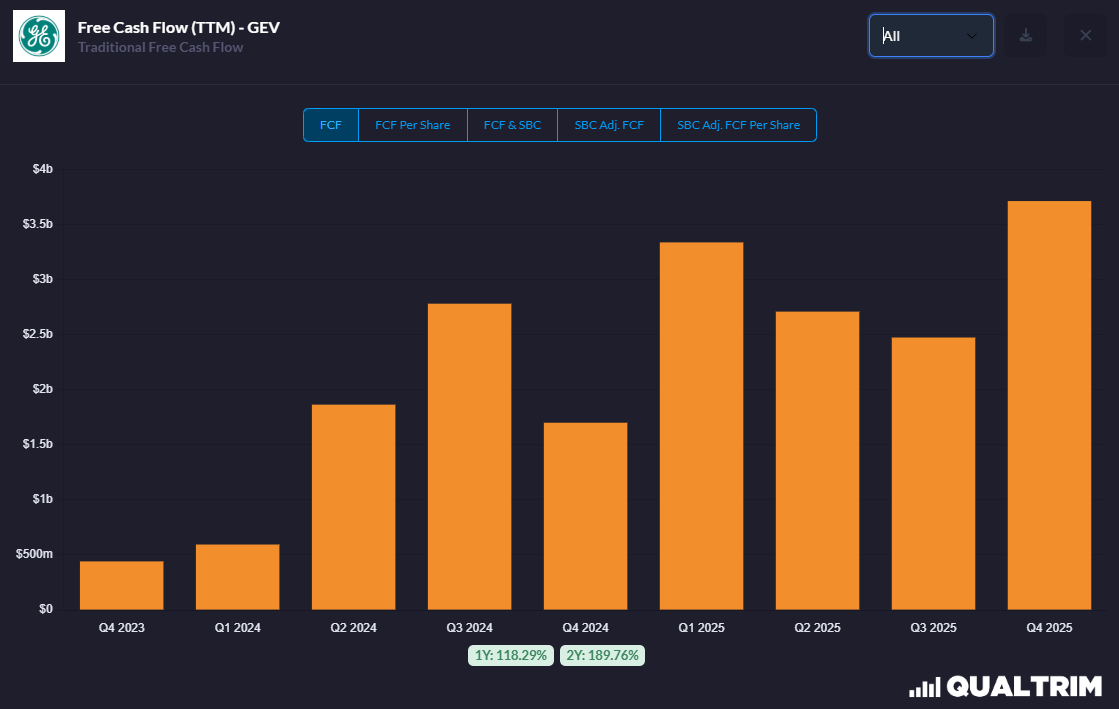
Most importantly, the business generated $3.7 billion in FCF, more than doubling its 2024 performance.
Q4 alone witnessed orders growing 65% organically to $22.2 billion, resulting in an extraordinary book-to-bill ratio of 2x.
This relentless influx of orders expanded the total company backlog by $31.2 billion YoY, bringing the total backlog to a record $150.2 billion.
This $150 billion backlog is not just a revenue indicator. It is a margin expansion engine.
Management explicitly noted on the earnings call that they grew the equipment margin embedded within the backlog by $8 billion in 2025 alone, representing six points of margin expansion.
This confirms that the company is not sacrificing price to win volume.
Instead, in a supply-constrained world, GE Vernova is dictating terms to its customers, locking in highly profitable contracts that will convert to exceptional earnings over the coming four years.
Forward guidance further confirmed this bullish narrative.
Management raised 2026 revenue guidance to a range of $44 billion to $45 billion, with adjusted EBITDA margins projected between 11% and 13%. FCF guidance was subsequently elevated to between $5.0 billion and $5.5 billion.
For a company of this scale to forecast such aggressive near-term growth speaks to an operational leverage dynamic that analysts are struggling to accurately model. The market is pricing the stock as if this growth is a temporary cyclical peak, completely ignoring the structural changes in global electricity consumption.
Power and The Gas Renaissance
Each of GE Vernova’s three segments has its own economics, and understanding them is crucial to understanding the total value of the business.
The Power segment remains the fundamental cash stream for the company, housing the gas, nuclear, hydro, and steam portfolios.
In Q4 2025, this segment reported outstanding order growth of 77%, bringing in $11.7 billion. Revenue for the full year grew by 10%, with EBITDA margins expanding to 14.7%.
The absolute dominance of this segment is predicated on the heavy-duty gas turbine business. As highlighted previously, the AI data centre buildout necessitates baseload natural gas. In the final three weeks of December 2025 alone, the company signed contracts for 6 gigawatts of new gas equipment, culminating in 24 gigawatts of new contracts for Q4.
The critical metric for investors to monitor here is the slot reservation agreement.
Because manufacturing capacity is finite and requires immense capital outlays, utilities and hyperscalers are essentially paying GE Vernova non-refundable deposits simply to reserve a future spot on the manufacturing line.
By the end of 2025, the combined gas power equipment backlog and slot reservations jumped from 62 gigawatts to 83 gigawatts. Management fully expects to hit 100 gigawatts under contract by the end of 2026.
This dynamic creates unprecedented pricing power.
Commentary from management confirmed that current slot reservation agreements are pricing 10 to 20 percentage points higher than the legacy orders already sitting in the backlog.
The company is entirely sold out of heavy-duty gas turbine capacity well into the late 2020s.
To address this, GE Vernova is expanding its manufacturing footprint, aiming to increase annual production capacity to approximately 20 gigawatts by mid-2026, which involves adding nearly 1,000 new production workers and hundreds of new advanced machining tools.
Furthermore, the Power segment benefits from an exceptional razor-and-blade business model.
GE Vernova operates the world’s largest installed base, comprising over 7,000 gas turbines globally. Every new turbine sold guarantees decades of high-margin recurring revenue through long-term service agreements.
In Q4 2025, the power services backlog grew to $70 billion, driven by customers investing heavily in maintaining their existing fleets to squeeze every possible megawatt out of the grid.
This massive services backlog provides a highly predictable, incredibly profitable revenue floor that insulates the company against broader macroeconomic volatility.
The market is currently valuing these service cash flows as if they are subject to standard industrial cyclicality, which is a fundamental error.
Electrification and the Transformer Crisis
If the Power segment is the reliable cash cow, the Electrification segment is the growth catalyst.
This division provides the software, switchgear, and high-voltage transformers required to physically move electricity from the generation source to the end consumer.
Revenue in this segment surged by 32% YoY in Q4 2025, while the adjusted EBITDA margin expanded by a remarkable 410 basis points to 17.1%.
Orders were 2.5 times greater than recognised revenue, demonstrating a desperate global scramble for grid equipment.
The defining constraint of the global electrical grid today is the high-voltage transformer. Transformers are complex, capital-intensive pieces of equipment that require highly specialised raw materials, specifically grain-oriented electrical steel and high-grade copper.
Decades of underinvestment, combined with the sudden surge in data centre demand and renewable energy integration, have created a severe global shortage.
Industry data indicates that transformer prices have escalated by 60% to 80% since 2020, with lead times stretching from a historical average of 30 weeks to an astounding 120 to 130 weeks.
GE Vernova recently executed genius capital allocation by acquiring the remaining 50% stake in Prolec GE for $5.3 billion, a transaction that successfully closed in February 2026.
Prolec GE is a premier manufacturer of electrical transformers in North America. By taking full ownership, GE Vernova internalised the most critical supply chain bottleneck in the entire energy transition.
This acquisition immediately adds approximately $3 billion in annual revenue to the 2026 forecasts, operating at an adjusted EBITDA margin of roughly 25%. More importantly, it grants the company absolute control over its delivery timelines, allowing it to offer comprehensive, integrated turnkey solutions to hyperscalers that competitors simply cannot match.
The Electrification segment is also securing monumental international contracts, proving its technological superiority on a global scale.
In the UK, the grid operator National Grid recently announced an unprecedented £35 billion investment plan for the 2026 to 2031 period, designated as the Great Grid Upgrade.
GE Vernova was selected as a primary partner on the high-voltage direct current (HVDC) converter systems framework, securing a massive pipeline of highly profitable infrastructure work.
Similarly, in India, the company secured a contract from the national transmission company POWERGRID to refurbish the Chandrapur 1,000-megawatt back-to-back HVDC link.
This project involves upgrading legacy systems with advanced solid-state technology and control platforms manufactured directly at GE Vernova’s facilities in India.
HVDC technology is incredibly complex and possesses immense barriers to entry, ensuring that GE Vernova, alongside a very select few European peers, maintains an oligopolistic grip on the market.
The integration of software into these hardware sales is driving the rapid margin expansion.
Products like GridOS and GridBeats allow utilities to orchestrate complex, decentralised energy networks through AI. Software inherently carries gross margins higher than heavy manufacturing, and as digital integration becomes mandatory for grid stability, the Electrification segment’s profitability profile will increasingly resemble that of a tech company rather than an industrial manufacturer.
Wind and the Offshore Restructuring
The Wind segment is currently the sole blemish on an otherwise flawless financial profile, reporting an EBITDA loss of approximately $600 million for the full year 2025.
Revenue for the segment declined by 6% YoY, largely driven by catastrophic execution and regulatory issues within the offshore wind market.
Offshore wind projects are exponentially more complex than their onshore counterparts, requiring specialised installation vessels, robust supply chains, and immense capital outlays.
The sector has been battered by severe raw material inflation, supply chain disruptions, and aggressive political interference.
Specifically, the Trump administration instituted a stop-work order on major offshore developments late in 2025, severely impacting GE Vernova’s flagship Vineyard Wind project off the coast of Massachusetts.
However, the market is pricing this segment as a permanent failure, which misinterprets management’s strategy and recent legal developments.
In January 2026, a judge overturned the administration’s stop-work order, granting a critical legal reprieve for the Vineyard Wind project, which is already 95% complete. If the remaining eleven turbines are installed before the contracted installation vessels depart in March, the company will avoid massive liquidated damages and secure the associated revenue.
This represents the fourth consecutive legal defeat for the administration regarding offshore wind freezes, suggesting that the regulatory headwinds may be subsiding.
More importantly, management is executing a ruthless, controlled wind-down of unprofitable operations.
They have explicitly stated that they are no longer actively seeking new offshore wind orders, choosing instead to focus entirely on executing the existing $3 billion backlog and servicing the installed base.
The company is instead moving aggressively toward the onshore market, where economics are superior and installation timelines are manageable. In 2025, the company secured 1.1 gigawatts of highly profitable onshore repowering orders in the US, upgrading older turbines with advanced, efficient components.
While guidance dictates a further $400 million EBITDA loss for the Wind segment in 2026, the long-term trajectory is positive. The company projects that by 2028, the segment will return to profitability with an EBITDA margin of 6%.
The current share price heavily penalises the company for these transitional losses, entirely ignoring the fact that the underlying onshore services business remains both strong and cash-generative.
Once the legacy offshore contracts are flushed from the system, the margin drag will vanish, creating an immediate catalyst for EPS expansion.
Nuclear Optionality
While not a primary driver of near-term cash flow, the company’s nuclear portfolio provides massive long-term optionality that the market assigns exactly zero value to today.
The push for carbon-free baseload power has resurrected global interest in nuclear generation, specifically Small Modular Reactors, or SMRs.
GE Vernova is a pioneer in this space with its BWRX-300 design.
In early 2026, the BWRX-300 successfully completed the second assessment stage of the UK’s Office for Nuclear Regulation, becoming the fastest company to achieve this important regulatory milestone.
The BWRX-300 represents a regime change in nuclear economics.
Utilising passive safety systems and advanced modular construction techniques, the reactor can be constructed in 24 to 36 months, requiring 90% less land and 50% less concrete than traditional gigawatt-scale nuclear facilities.
The company is already progressing with the construction of the first unit in Canada, establishing a proof-of-concept for the global market.
Furthermore, GE Vernova has signed deals with major United Kingdom nuclear engineering firms, including Boccard and Cavendish Nuclear, to localise the supply chain for potential future deployments under the GB Nuclear programme.
As governments globally scramble to meet net-zero targets while satisfying AI power demands, GE Vernova is perfectly positioned to monetise its reactor technology through lucrative licensing and engineering contracts.
This gives investors exposure to the future of clean energy entirely for free at current valuations.
The Domino Effect
A surface level analysis stops at the order book. I want to go deeper. Let’s take a look at the cascading effects resulting from this infrastructure bottleneck.
The first domino is obvious: GE Vernova sells more gas turbines.
The second one is the manifestation of the transformer crisis.
Because lead times for large power transformers have stretched past two years, utilities cannot physically connect the new generation assets to the grid in time to meet data centre demand.
This delay fundamentally alters the behaviour of the end consumer.
This leads directly to the third domino: tech companies are forced to become independent power developers.
We are seeing hyperscalers bypass the traditional utility model entirely, funding net-new generation facilities directly adjacent to their data centres in ‘behind-the-meter’ configurations.
This benefits GE Vernova immensely, as they are no longer solely reliant on slow-moving, heavily regulated utility procurement cycles. They are now selling directly to the most highly capitalised entities in human history, entities that value speed of deployment above all else and are willing to pay massive premiums to secure manufacturing slots.
The product of all of this is a severe strain on global commodity markets, specifically copper and grain-oriented electrical steel.
A typical high-voltage transformer is essentially just a massive copper wire wound around a specialised steel core. As global electrification accelerates, a severe copper supply cliff is emerging in late 2026, driven by a complete lack of greenfield mining investments over the past decade.
In order to justify the risk of a new greenfield mine, the copper price needs to exceed $5.00/lb sustained. This impending commodity supercycle will drive input costs higher.
However, because GE Vernova now fully owns Prolec GE, and because its slot reservation agreements are priced dynamically, the company can pass these inflationary costs directly onto the consumer.
In an oligopoly, inflation is a pass-through mechanism.
Competitors who do not possess vertical integration will find their margins crushed by raw material costs, further consolidating GE Vernova’s market share.
All roads lead to an outcome where GE Vernova captures a disproportionate share of the total CapEx allocated to the AI revolution.
Capital Allocation and ROE
A sign of a superior business is its capital allocation framework.
Despite the heavy CapEx required to expand manufacturing capacity, GE Vernova is generating immense amounts of cash.
The company ended 2025 with nearly $9 billion in cash and equivalents.
In a powerful signal of confidence regarding future cash flow generation, the board of directors authorised a massive increase in shareholder returns in early 2026. The quarterly dividend was doubled from $0.25 to $0.50 per share.
Furthermore, the share repurchase authorisation was aggressively increased from $6 billion to $10 billion.
Through 2025, the company had already repurchased more than 8 million shares, returning a total of $3.6 billion to shareholders.
The aggressive reduction in the outstanding share count will naturally boost EPS, providing a strong tailwind to the valuation multiples.
Management has guided for cumulative FCF generation of at least $24 billion between 2025 and 2028, ensuring that the aggressive buyback programme can be executed without compromising investments or balance sheet health.
This relentless focus on returning capital while simultaneously funding hyper-growth is a rare and highly attractive trait.
The broader market is currently pricing GE Vernova as a legacy industrial manufacturer experiencing a temporary cyclical peak.
They are wrong.
This is a structural rewiring of the global grid, and the market is fundamentally mispricing the outer years of this $150 billion backlog.
Below the paywall, I strip away the noise of backward-looking multiples.
DDI members get immediate access to my 10-year DCF model, a segment-by-segment valuation breakdown, and the exact entry prices I am targeting as this multi-year re-rating unfolds.
Don’t invest on the narrative alone - unlock the mathematics below.